
IVF clinics face unique challenges like managing complex patient data, coordinating lab workflows, ensuring compliance, and delivering exceptional patient care. Traditional record-keeping and fragmented systems often create inefficiencies, errors, and stress for both staff and patients. A web-based IVF EMR system like MedART can transform these operations, providing a centralized, efficient, and patient-friendly platform.
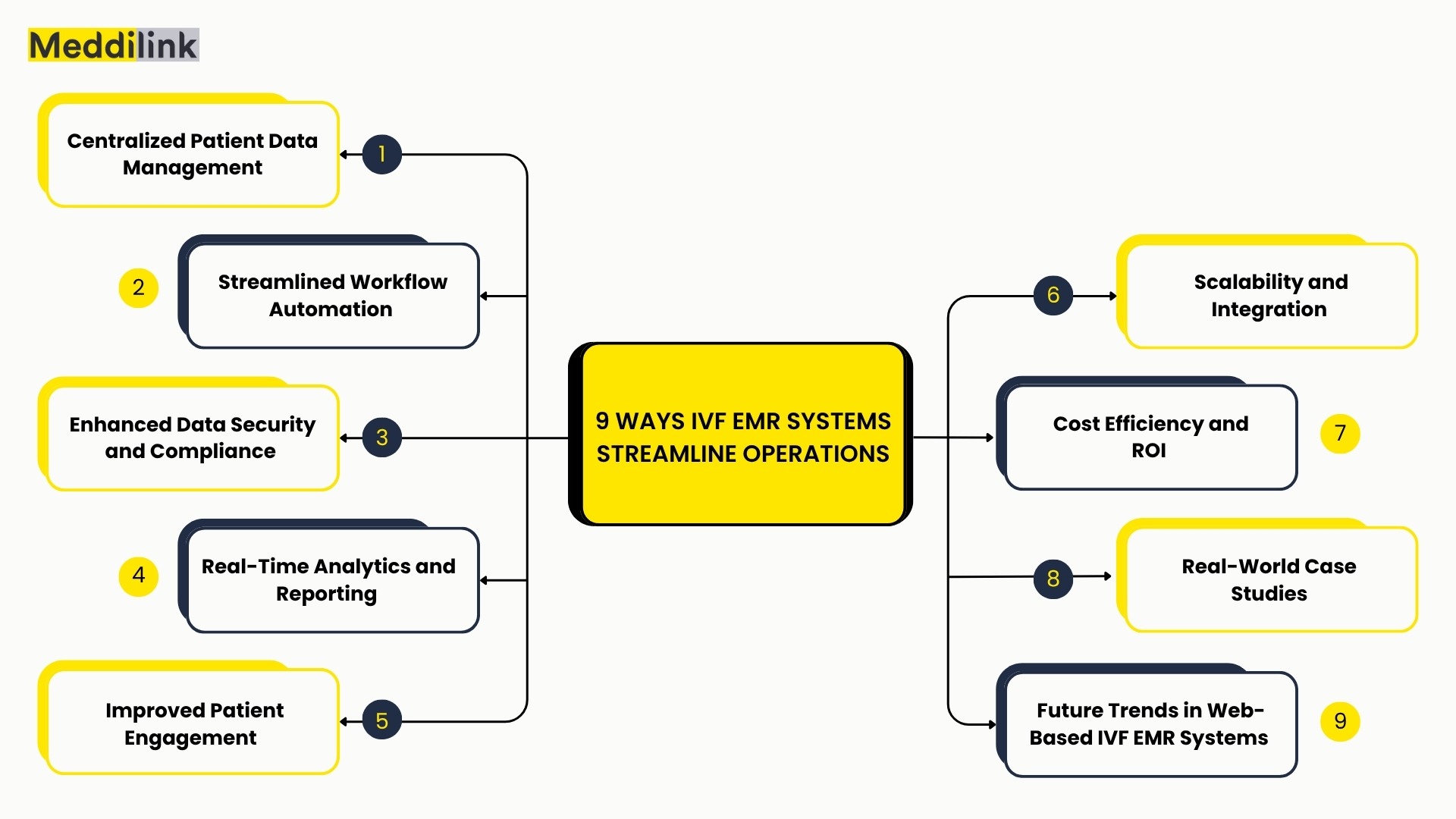
Centralized Patient Data Management
Why it matters:
IVF treatments generate large volumes of patient data, including medical history, lab results, imaging, medications, and consent forms. Disorganized records can lead to errors, delayed treatments, or miscommunication among staff.
How a web-based IVF EMR helps:
- Unified Patient Records: All patient information is stored in one secure platform, accessible in real-time by clinicians and staff.
- Error Reduction: Centralized data reduces mistakes from duplicate entries or misplaced documents.
- Enhanced Collaboration: Multiple staff members can access updated records simultaneously, improving communication across departments.
- Historical Data Access: Clinicians can track patient progress over multiple cycles, enabling better treatment decisions.
Beyond administrative efficiency, centralized data allows clinics to conduct long-term outcome analysis. For instance, by reviewing data from multiple cycles, clinicians can identify which protocols yield higher success rates for specific patient profiles. This not only improves patient care but also supports evidence-based decision-making in reproductive medicine.
Example: A clinician reviewing a patient’s previous IVF cycle can instantly see lab reports, medications used, and outcomes without searching through multiple files or systems.
Streamlined Workflow Automation
Why it matters:
IVF clinics deal with numerous routine tasks such as scheduling, reminders, billing, and lab coordination. Managing these manually consumes staff time and increases the chance of errors.
Benefits of workflow automation:
- Appointment Scheduling: Automatically schedules patient visits, sends reminders, and adjusts for lab availability.
- Task Management: Assigns tasks to staff based on roles and deadlines, ensuring nothing is missed.
- Billing Automation: Reduces errors in invoicing, tracks payments, and manages insurance claims efficiently.
- Treatment Protocol Automation: Tracks treatment steps and ensures adherence to protocols.
Automation can also help prioritize tasks based on urgency, ensuring time-sensitive procedures like embryo transfers or egg retrievals are never delayed. This reduces stress for staff and enhances patient confidence in the clinic’s reliability.
Example: MedART automatically notifies patients about upcoming embryo transfers, medication schedules, and lab tests, while alerting staff to prepare necessary documentation and lab work.
Enhanced Data Security and Compliance
Why it matters:
Patient data in IVF clinics is highly sensitive. Clinics must comply with privacy regulations like HIPAA, GDPR, or local standards.
How a web-based IVF EMR ensures safety:
- Advanced Encryption: Patient records are stored securely, preventing unauthorized access.
- Access Control: Different levels of access for doctors, nurses, lab staff, and administrators.
- Audit Trails: Tracks who accessed or modified data, ensuring accountability.
- Regulatory Compliance: Helps clinics maintain legal compliance with healthcare regulations.
Modern EMR systems also provide automatic updates for regulatory changes, ensuring clinics remain compliant without additional administrative burden. This is crucial in IVF, where patient confidentiality is both a legal and ethical requirement.
Impact: Patients feel confident sharing personal health data, and clinics avoid legal complications or data breaches.
Real-Time Analytics and Reporting
Why it matters:
Data-driven insights are critical for improving treatment success rates, optimizing clinic operations, and making informed business decisions.
Features of a web-based IVF EMR:
- Performance Tracking: Monitors treatment success rates, cycle outcomes, and patient demographics.
- Operational Insights: Identifies bottlenecks, resource utilization, and workflow efficiency.
- Custom Reports: Generate reports for management, staff, or regulatory purposes.
- Predictive Analytics: Advanced EMRs can forecast trends, such as patient response patterns or lab efficiency.
Real-time analytics also helps clinics anticipate resource needs, like staffing for peak periods or ordering lab consumables in advance. Predictive insights allow clinics to plan more strategically, reducing operational disruptions and improving patient experience.
Example: MedART’s dashboard can show the percentage of successful cycles for patients under different protocols, helping clinicians refine treatment approaches.
Improved Patient Engagement
Why it matters:
IVF is emotionally and physically demanding. Engaged, informed patients are more likely to comply with treatment plans and experience better outcomes.
How web-based IVF EMR supports patients:
- Patient Portal: Allows patients to view appointments, lab results, and treatment updates.
- Secure Messaging: Enables direct communication with doctors or nurses.
- Notifications and Reminders: Patients receive alerts for medications, tests, or procedures.
- Education Resources: Provides access to guides, videos, and FAQs about IVF processes.
Engaged patients tend to feel more confident in their treatment journey. Web-based EMRs can even support personalized care plans, where each patient receives tailored recommendations based on their specific fertility profile. This increases treatment adherence and satisfaction.
Impact: Patients feel supported and informed throughout their journey, improving satisfaction and trust.
Scalability and Integration
Why it matters:
As clinics expand, they need systems that can grow with them, managing more patients, staff, and satellite locations.
Key advantages of web-based IVF EMR:
- Cloud-Based Infrastructure: Easily adds new users, clinics, or labs without hardware upgrades.
- Integration with Labs and Systems: Syncs with lab information systems, EHRs, and third-party applications.
- Consistent Workflows Across Locations: Ensures standard operating procedures are maintained everywhere.
- Remote Access: Staff can access the system securely from multiple locations.
Integration capabilities enable clinics to connect their EMR systems with AI-based analytics, telemedicine solutions, or patient engagement tools for remote counseling. This creates a holistic ecosystem that modern IVF clinics can rely on.
Example: A multi-center fertility network can manage patient care consistently across locations, with central reporting and communication.
Cost Efficiency and ROI
Why it matters:
Investing in an EMR system may seem costly upfront, but the operational savings and efficiency gains deliver strong ROI.
How clinics benefit financially:
- Reduced Administrative Costs: Less manual work and fewer errors save staff time.
- Optimized Resource Allocation: Tracks staff, lab equipment, and supplies for better utilization.
- Improved Billing Accuracy: Reduces delayed or incorrect payments.
- Higher Patient Throughput: Automated workflows allow staff to handle more patients without extra resources.
Beyond direct cost savings, EMRs can increase patient retention by improving engagement and satisfaction. A more satisfied patient is more likely to complete multiple treatment cycles at the same clinic, contributing indirectly to revenue growth.
Example: Clinics implementing MedART report fewer scheduling errors, smoother billing cycles, and overall operational efficiency that offsets software costs.
Real-World Case Studies
Improved cycle success rates by using analytics for decision-making. Clinics that have adopted MedART report significant improvements:
- Faster patient onboarding and data entry.
- Streamlined lab coordination and treatment tracking.
- Higher patient satisfaction due to engagement tools and transparent communication.
Staff Feedback: Nurses and administrative staff highlight time savings and reduced stress. Clinicians praise the easy access to patient history and lab results, which helps them focus on treatment rather than paperwork. Case Study
Some clinics have even leveraged EMR data to conduct internal research, identifying patterns in patient response and contributing to continuous improvement in treatment protocols.
Future Trends in Web-Based IVF EMR Systems
Key advancements to watch:
- Telehealth Integration: Virtual consultations and remote monitoring improve accessibility.
- Voice and Automation Tools: Streamlined documentation using voice commands and automated reporting.
- Interoperability Across Platforms: Seamless integration with national health records and lab networks.
These innovations will further enhance clinic efficiency, patient experience, and treatment outcomes.
Meddilink’s architecture is built with these innovations in mind, designed to evolve as IVF technology advances.
Conclusion
A web-based IVF EMR system like MedART is more than just a software upgrade, it is a strategic solution that transforms IVF clinic operations. From centralizing patient data and automating workflows to ensuring security, analytics, engagement, and scalability, the benefits are wide-ranging and measurable.